

• Home
  • About
    • Lyle Williams, LMFT
    • Diamond Slone Couch, LMFT-A
  • Schedule A Session
  • Therapy Groups
  • Services Provided
    • AAMFT Supervision Services
    • Gestalt Therapy
  • Contact
  • Couples & Coffee
  • Fruit of the Mind Blog

Fruit of the Mind Blog

does being a feminist benefit you or hurt you?

3/2/2023

0 Comments

 
Picture
Feminism and how a person lives out their version of this ideology can be a tricky subject when it comes up in therapy sessions.  I don't have the answer to if Feminism is good for you or bad for you; however, I have come across a thought provoking conversation that I think is worth sharing, so people can contemplate their personal relationship with feminist ideologies. 
0 Comments

How can I overcome financial stress?

1/6/2023

0 Comments

 
Picture
Here are a few strategies that may help you mentally survive the financial stress of economic hard times:

  1. Take care of your physical health: Make sure to get enough sleep, eat healthy, and exercise regularly. Taking care of your body can help improve your mood and overall well-being.
  2. Practice gratitude: It can be easy to focus on what we don't have during difficult times, but practicing gratitude can help shift our focus to what we do have. Try keeping a gratitude journal, where you write down a few things you're thankful for each day.
  3. Stay connected: Social support is important for our mental health. Make an effort to stay connected with friends and family, either in person or through technology. If people are willing to help you, practice humility, and accept the help. 
  4. Find ways to manage stress: Stress can take a toll on our mental health. Find healthy ways to manage stress, such as meditation, prayer, reading scripture, spending time in nature, watch something that will make you laugh, or exercise.
  5. Seek professional help if needed: If you're struggling to cope with the challenges of economic hard times, it may be helpful to seek the support of a mental health professional and/or a non-profit financial financial planning service. They can provide you with coping strategies and support to help you get through this difficult time.
0 Comments

How do I get people to like me?

1/6/2023

0 Comments

 
Picture
It's not about getting someone to like you because you want them to. It's about finding someone who genuinely likes you for who you are. Here are a few things you can do to increase your chances of finding someone who likes you for you:

  1. Be yourself: Don't try to be someone you're not in order to impress others.
  2. Treat others with kindness and respect: This is important for any relationship, but especially so when it comes to dating.
  3. Take care of yourself: Physical attraction is important, but it's not the only thing that matters. Make sure you're taking care of your physical, mental, and emotional health.
  4. Be confident: Believe in yourself and your own worth. This will make you more attractive to others.
  5. Be open to new experiences: Try new things and be open to meeting new people. This will help you find someone who shares your interests and values.
Remember, it's important to be patient and to keep an open mind. It may take time to find someone who is right for you, but it will be worth it when you do.
0 Comments

How to apologize, forgive, and reconcile in relationships

1/6/2023

1 Comment

 
Picture
An effective apology typically includes the following steps:

  1. Acknowledge that you have caused harm or offense.
  2. Express remorse for your actions.
  3. Take responsibility for what you did.
  4. Make amends, if possible.
  5. Offer a sincere apology.

It's important to keep in mind that an apology should be genuine and heartfelt. A superficial or insincere apology can often do more harm than good.

To effectively forgive someone, try the following steps:

  1. Acknowledge your feelings: It is important to recognize and acknowledge the emotions you are feeling. This can include anger, hurt, resentment, etc.
  2. Communicate your feelings: Talk to the person who you need to forgive and let them know how their actions or words affected you. This can help you express your feelings and facilitate understanding and healing.
  3. Practice self-care: Taking care of yourself is important in the forgiveness process. Engage in activities that bring you peace and happiness, such as exercise, meditation, or spending time with loved ones.
  4. Let go of the need for retribution: Forgiveness does not mean forgetting what happened or condoning the behavior. However, it does mean letting go of the need for revenge or punishment.
  5. Choose to forgive: Forgiveness is a choice and it can take time. It may be helpful to repeat affirmations or mantras to yourself, such as "I choose to forgive" or "I let go of my anger and resentment."
  6. Seek support: It can be helpful to seek support from friends, family, or a therapist during the forgiveness process. They can provide a safe and supportive space for you to work through your feelings.
  
There are several steps that two people can take to effectively reconcile after an apology and forgiveness:

  

  1. Communicate openly and honestly: Both parties should be open and honest with each other about their feelings and concerns, and listen actively to each other. This will help to build trust and understanding between the two individuals.
  2. Seek professional help: If the situation is particularly complex or if there is a history of conflict or resentment, it may be helpful to seek the guidance of a professional counselor or mediator.
  3. Set clear boundaries: Both parties should be clear about what behavior is acceptable and what is not, and work together to establish healthy boundaries that will help to prevent future conflict.
  4. Practice empathy: Both parties should try to understand and empathize with each other's perspective and feelings, and work to build a sense of mutual understanding and respect.
  5. Make amends: If the situation calls for it, both parties should work together to make amends and repair any damage that may have been caused by the conflict. This can help to restore trust and rebuild the relationship.
1 Comment

What are some gift ideas for my husband / boyfriend?

1/6/2023

0 Comments

 
Picture
Here are some ideas to consider when choosing a gift to give to your husband / boyfriend. 

  1. A personalized piece of jewelry such as a watch or bracelet.
  2. A gift card to his favorite restaurant or store.
  3. A new piece of technology such as a smart watch or phone.
  4. A book or magazine subscription to a topic he is interested in.
  5. A gift certificate for a spa day or massage.
  6. A new hobby or activity such as golf lessons or skydiving.
  7. A gift basket filled with his favorite snacks or treats.
  8. A new tool or gadget for his favorite hobby or pastime.
  9. A membership to a gym, martial arts school, or fitness class.
  10. An experience gift such as tickets to a sporting event or concert.
0 Comments

What are some gift Ideas for my wife / Girlfriend?

1/6/2023

0 Comments

 
Picture
Here are a few ideas:
  1. Jewelry - A piece of jewelry can be a timeless and meaningful gift. Consider getting her a necklace, bracelet, or pair of earrings.
  2. Experiences - Consider giving her an experience, like tickets to a concert, show, or sporting event. You could also plan a weekend getaway or a day at the spa.
  3. Home goods - If your wife is into home decor, you could consider getting her something for the home, like a candle, throw pillow, or kitchen gadget.
  4. Subscription - A subscription to a service or magazine that aligns with her interests could make for a great gift.
  5. Personalized gift - A personalized gift, like a custom piece of art or a special photo album, can be a unique and thoughtful present.
Ultimately, the best gift will depend on your significant other's interests and passions. Try to think about what she would truly appreciate and enjoy.
0 Comments

Who wears the pants in this relationship?

10/18/2022

4 Comments

 
Picture
I have encountered several couples who grapple with the idea of the what their preferred leadership dynamic needs to be for their relationship.  At the heart of the conversation is the question of, who is in charge of this relationship; or in other words, who holds the power to decide what we do and / or who is accountable for safety and security of needs when life throws extreme challenges at us? 

This is an important question that I believe is beneficial for all (western culture)  couples to discuss. As a framework for this conversation, I recommend borrowing terms from organizational leadership theory. Please consider this list of the 5 most common leadership styles as you contemplate the leadership dynamic of your relationship. 
  • Transformational Leadership
  • Laissez-Faire Leadership
  • Authoritative Leadership
  • Transactional Leadership
  • Democratic Leadership

Each leadership style has pros and cons for the leader and the teammate in the marriage. If you and your spouse haven't discussed leadership in your marriage yet, I hope you will give it a try and see what comes from the discussion.  


4 Comments

The #1 problem in relationships...

7/14/2022

1 Comment

 
 (It isn't you... It isn't me... It's our negative interaction cycle!  The #1 problem of your relationship is the combination of two people's self protective behavior when they both feel scared in a relationship.  In emotionally focused therapy (EFT), we call this relationship pattern a negative interaction cycle.   The image below depict what the negative interaction cycle is in terms of how it can manifest via emotions and self protective behaviors in a relationship. 
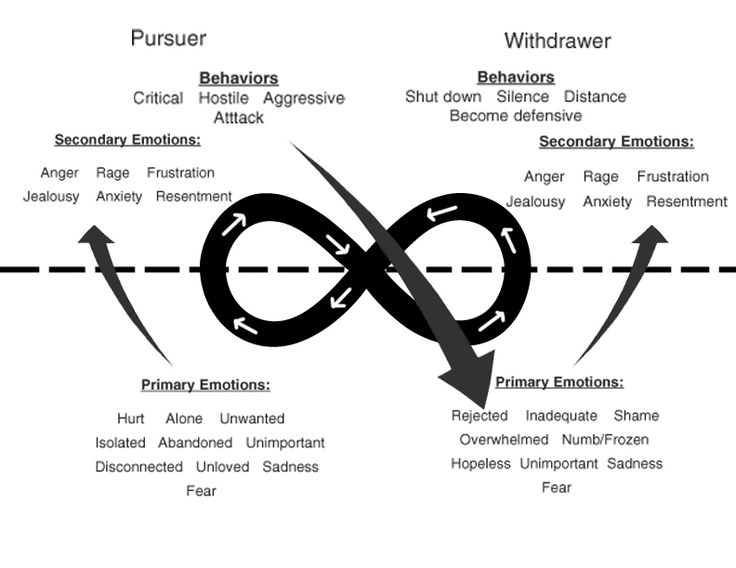
​
Picture
The next image depicts what happens when an EFT trained therapist gets involved with a couple and begins to help them learn how to de-escalate and heal old attachment wounds, so the couple can exit their negative interaction cycle at will. 

Picture
This old bugs bunny cartoon is a perfect metaphor of what it is like to be in a relationship that has a negative interaction cycle running amuck. 
  • Bugs Bunny = You / your significant other
  • Plane = Your Relationship
  • Gremlin = Negative Interaction Cycle
Don't let a negative interaction cycle destroy your relationship.  Increase your self-awareness, increase your emotional intelligence, and have a healthy relationship that satisfies the needs of you and your significant other by trying emotionally focused couples therapy. 
1 Comment

THe Pros and Cons of accepting health insurance (for therapists)

10/13/2021

4 Comments

 
Picture
A study published in JAMA Psychiatry found that psychiatrists are less likely than other health care professionals to accept insurance. Some sources report similar numbers for therapists, psychologists, and others in the mental health care profession. This may decrease access to quality mental health care and prove frustrating for both therapists and clients.
While therapists who do accept insurance may be able to see more clients, insurance reimbursement is not a panacea to the many challenges of running a practice. Every therapist must weigh the benefits and drawbacks of accepting insurance, then decide which insurance panels and what approach to insurance payments will offer the greatest benefits with the least amount of hassle. 
THERAPIST INSURANCE: BASICS OF ACCEPTING INSURANCE Therapists have two options for accepting insurance:
Join a provider panel Therapists interested in being directly reimbursed by insurance companies can join the insurers’ preferred provider panel. This usually requires a fairly intensive application process, and approval can take several months. Once the therapist is approved, however, the insurer directly pays the therapist for their services. Being on a provider panel may also offer some marketing benefits because most insurers have a directory of preferred providers that potential clients may use to find you. 
Be an out-of-network provider Some therapists opt to give their clients documents—called superbills—so that the clients can receive reimbursement from their insurer. These out-of-network providers usually accept payment directly from clients. It is then the client’s responsibility to seek reimbursement from the insurer. Some therapists work with clients to make this strategy more affordable. You might, for example, only bill the client once they have been reimbursed. There is no guarantee that the client will be reimbursed, however, and therefore no guarantee of payment for services if you do not receive payment upfront. 
BENEFITS OF ACCEPTING INSURANCE FOR THERAPISTSThere are many reasons to consider accepting insurance. Those include:
  • Improving access to mental health care. Clients with limited financial means need mental health care, too. Indeed, sometimes the clients with the most intensive needs are also those who cannot afford to pay for therapy. By accepting insurance, including Medicaid, you increase their access to care. 
  • Diversifying your client base. If you accept insurance, you will have access to a larger and more diverse group of potential clients. 
  • A chance to earn more money. Insurance reimbursement may increase your profits by offering greater access to more clients and ensuring that clients can continue with therapy for as long as necessary. 
  • Marketing opportunities. Many insurance panels help market their preferred providers by listing them in a directory. An insurer is a steady source of referrals. 
  • Increased credibility. Clients may trust you more if you accept insurance. 
  • Improved client loyalty. Clients may be more likely to stay in therapy if they know your services are covered. Clients who do not have the financial means to continue therapy, by contrast, may unexpectedly drop out. 
DRAWBACKS OF ACCEPTING INSURANCE FOR THERAPISTS Accepting insurance is not a viable strategy for every therapist. Some of the drawbacks include: 
  • A time-consuming process. If you opt to become a preferred provider, you will need to apply to each individual provider panel. This may require researching the best panels to join and completing mountains of paperwork. 
  • Reimbursement rates. Reimbursement rates are not always consistent with a therapist’s standard rate. Sometimes they are as low as $60 to $80 per hour. 
  • No balance billing. If you are a preferred provider on an insurance panel, you cannot engage in balance billing. This is the practice of billing a client for the difference between the reimbursement rate and your usual rate. If you are an out-of-network provider whose clients seek reimbursement, however, you can bill your clients the full amount. 
  • Complex billing. If you choose to accept insurance, you will need to follow the insurance provider’s requirements for billing. Out-of-network providers must create superbills that contain proper billing codes. 
  • Service coverage. Not all therapy services will be covered. The federal Mental Health Parity and Addiction Equity Act requires insurers to cover mental health services at similar rates and under similar criteria to physical health issues. Practically speaking, however, many disparities exist. You may have to fight for coverage of certain services or diagnose a client with specific conditions in order to provide approved types of care. 
  • Payment delays. In general, insurers must pay a claim within 30 days. If the claim is denied, however, you could wait longer pending an appeal. You might not even get paid at all. 
BEST INSURANCE PANELS FOR THERAPISTS: HOW TO CHOOSE When assessing whether to accept insurance, it’s important to consider which options are available in your area. Many therapists adopt an intermediate approach, giving their clients superbills for reimbursement without directly accepting insurance payments. This is a good option for therapists who want to serve more clients, but who do not have the time or inclination to apply for insurance panels. 
For therapists interested in joining a provider panel, it’s important to weigh the benefits of each specific provider panel. Consider the following: 
  • Which insurers are most popular in your area? It’s usually better to join the big panels, since they cover more clients. 
  • What is the reimbursement rate for each provider panel? 
  • What requirements must you meet to receive reimbursement? 
  • What do other therapists say about the provider panels in your area? Ask around. You may find that some insurers are notoriously difficult to work with, even if they seem good on paper. 
  • Do you meet the credentialing requirements for the most appealing provider panels? If not, how costly and time-consuming would it be for you to meet these requirements? 
  • Which provider panels offer additional services to preferred providers? Are there any insurers that list providers in a directory? 
Therapists might also consider becoming Medicaid providers, since this may allow them to serve more children and people of limited financial means. 
GoodTherapy helps therapists run and market their practices with a host of continuing education seminars, practice management tips, and more. We list members in our directory, which is a highly popular source of therapist referrals. Join today.

References: 
  1. Bishop, T. F., Press, M. J., Keyhani, S., & Pincus, H. A. (2014). Acceptance of insurance by psychiatrists and the implications for access to mental health care. JAMA Psychiatry, 71(2), 176-181. doi: 10.1001/jamapsychiatry.2013.2862 
  2. Centore, A. (2012, December 17). Mental health billing: 10 common questions and answers. American Counseling Association. Retrieved from https://www.counseling.org/news/aca-blogs/aca-member-blogs/aca-member-blogs/2012/12/17/mental-health-billing-10-common-questions-and-answers
  3. Dear, B. (2017, May 21). Should you accept insurance or just self-pay therapy clients? Retrieved from https://simple.icouch.me/blog/should-you-accept-insurance-or-just-self-pay-therapy-clients
  4. Dembosky, A. (2016, July 14). Frustrated you can’t find a therapist? They’re frustrated, too. Retrieved from https://www.npr.org/sections/health-shots/2016/07/14/481762357/frustrated-you-can-t-find-a-therapist-they-re-frustrated-too
  5. Does your insurance cover mental health services? (n.d.). Retrieved from https://www.apa.org/helpcenter/parity-guide
  6. The Mental Health Parity and Addiction Equity Act. (n.d.). Retrieved from https://www.cms.gov/cciio/programs-and-initiatives/other-insurance-protections/mhpaea_factsheet.html
(GoodTherapy.org, 2021. Original article)

4 Comments

Mental Health Awareness Month & Women’s Health Week

5/19/2021

0 Comments


MAY 2021

Picture
by Lyle Williams, LMFT on May 17th
​

Mental Health Awareness Month
The Month of May was designated as Mental Health Awareness Month in 1949 by a non-profit organization called Mental Health America.  Since then, this month has been recognized as a time to NORMALIZE CONVERSATIONS ABOUT MENTAL HEALTH and SHARE RESOURCES THAT SUPPORT MENTAL WELL-BEING. According to the National Institute of Mental Health (“NIMH”), an estimated 51.5 million people in the U.S. live with a mental illness, which is about 20% of the adult population.  Out of the adult population, 5% experience serious mental illness.  Additionally, 17% of the youth, ages 6 to 17 years old, struggle with mental health issues (NIMH, May 2021, https://www.nimh.nih.gov/health/statistics/mental-illness). If you didn’t know, now you know.  
If you are interested in engaging in some mental health awareness activities, please check out the #MentalHealth4All event calendar on the American Foundation for Suicide Prevention website (https://afsp.org/mentalhealth4all?gclid=CjwKCAjwqIiFBhAHEiwANg9szswpobiVCNlcPNFBG_Xv98lOTwG7dCCOySmcK-ulygoxG8_IkjC7GRoCYGcQAvD_BwE#-mentalhealth4all-social-graphics). 

Resources to share
Life is hard at times. It can be difficult to know if we are struggling with “normal” life challenges or a mental health problem. Here are some resources that you can use to discreetly find out if you are dealing with a mental health problem (for free). 
  • Mental Health America [https://screening.mhanational.org/screening-tools/]: offers self-assessment screenings for a wide variety of conditions, including addiction, PTSD, bipolar disorder, and more. 
    • Youth Test [https://screening.mhanational.org/screening-tools/youth/?ref] for those under 18 years of age
    • Parent Test [https://screening.mhanational.org/screening-tools/parent/?ref] for parents to use to assess their child
  • U.S. Dept. of Veterans Affairs: You can take the Veterans Affairs (VA) screening for PTSD [https://www.myhealth.va.gov/mhv-portal-web/ptsd-screening] regardless of whether you served in the military or not.
Remember that results from online assessments are not an official diagnosis or substitutes for a consultation with your healthcare provider. 
In the event that you or someone you know is actually experiencing a mental health concern, I have included a list of resources below for you to reference. Please share this information as you engage with others and do your part to NORMALIZE CONVERSATIONS ABOUT MENTAL HEALTH this month. 
  • Brightline (https://hellobrightline.com/): Brightline is the first comprehensive behavioral health solution designed to support kids, teens, and parents across a range of common family challenges. 
  • ChoicesInRecovery.com (https://www.choicesinrecovery.com/): Support and information for people with Schizophrenia, Schizoaffective, and Bipolar Disorder and their caregivers, including Strategies for Success [https://www.choicesinrecovery.com/strategies-for-success.html] that can be used daily by people living with mental health conditions. 
  • Dialectical Behavior Therapy Clinic at Rutgers University (DBT-RU) (https://gsapp.rutgers.edu/centers-clinical-services/DBT): DBT-RU is a research and training clinic that provides comprehensive Dialectical Behavior Therapy (DBT) services to individuals in the community. Be sure to watch their Radical Acceptance video [https://www.youtube.com/watch?v=iVwIVwGOnpo]. 
  • DRK Beauty (https://thisisdrkbeauty.com/drk-healing/): DRK Beauty is a well-being and mental health digital platform that helps women of color discover and craft their own unique well-being journey. “We blend a powerful mix of community, content, programming, and services that speaks to the psychological, spiritual, and physical needs of our community, ultimately empowering them to blossom, all through a convenient app.”
  • Equoo (http://www.equoogame.com/): Equoo is a game that teaches individuals psychological skills in a fun and captivating way to deal with emotional and mental stressors in a healthy and productive fashion. 
  • Ford Williams Family Therapy (FWFT) (https://www.fordwilliamsfamilytherapy.com/): FWFT is a psychotherapy practice that offers telemental health  sessions to clients located in New York, Connecticut, and North Carolina. The practice specializes in helping families, couples, and individuals heal from emotionally distressing life circumstances. This practice is a good fit for people seeking a male therapist who is culturally competent and has military experience.
  • Happify (https://www.happify.com/): Happify brings you effective tools and programs (via the web and an app) to help you take control of your feelings and thoughts using proven techniques developed by leading scientists and experts who’ve been studying evidence-based interventions in the fields of positive psychology, mindfulness, and cognitive behavioral therapy. Check out their video, How to Defeat Negative Thinking [https://www.youtube.com/watch?v=_XLY_XXBQWE]. 
  • IDONTMIND (https://idontmind.com/): IDONTMIND is a mental health awareness campaign and lifestyle brand working to get people talking about their minds and to generate positive messaging about mental health. Check out their online journal [https://idontmind.com/journal] for articles on all things mental health.
  • Lyf (https://lyf.app/): Lyf is a social media app where users share highly personal aspects of themselves without the fear of judgment. Lyf users receive support during some of their most grueling, challenging, confronting or even “embarrassing” stages of their lives from other people who have no preconceptions about their fellow Lyfers. Lyfers have the opportunity to connect with and chat to others on the same life paths or journeys; whether it’s a struggle or celebration, in Lyf, you aren’t alone. 
  • Make Sure Your Friends Are Okay (https://makesureyourfriendsareokay.com/): Through merchandise and social media, Make Sure Your Are Okay is building a community of like-minded people who want to help us get the world talking. 
  • National Child Traumatic Stress Network (NCTSN)  (https://www.nctsn.org/): NCTSN was created to raise the standard of care and increase access to services for children and families who experience or witness traumatic events. Be sure to check out their Pause, Reset, Nourish (PRN) to Promote Wellbeing handout [https://www.nctsn.org/sites/default/files/resources/fact-sheet/pause_reset_nourish_to_promote_wellbeing_use_as_needed_to_care_for_your_wellness.pdf]. 
  • notOK App (https://www.notokapp.com/): The notOK App® is a free app that takes the guesswork out of asking for help when you’re feeling vulnerable. 
  • PositivePsychology.com (https://positivepsychology.com/): PositivePsychology.com is a science-based online resource of courses, techniques, tools, and tips to help you put positive psychology into practice. Be sure to check out their radical acceptance worksheets [https://positivepsychology.com/radical-acceptance-worksheets/], including Focus on the Present for Radical Acceptance [https://positivepsychology.com/wp-content/uploads/2020/10/Focus-on-the-Present-for-Radical-Acceptance.pdf]. 
  • Postpartum Support International (https://www.postpartum.net/): The mission of Postpartum Support International is to promote awareness, prevention, and treatment of mental health issues related to childbearing in every country worldwide. 
  • PsychHub (https://psychhub.com/videos/): PsychHub is the world’s largest online platform for mental health education with revolutionary Learning Hubs to take you from knowledge learned to behavior changed. 
  • PsychoSocial (https://psychosocial.media/): PsychoSocial is a mental health multimedia business created by mental health professionals in a joint effort to raise mental health awareness and destigmatize mental illness. Check out their handout on Positive Affirmations [https://psychosocial.media/wp-content/uploads/2019/04/Paragon-One-Plaza-and-Sky-Garden-3.pdf]. 
  • Supportiv (https://www.supportiv.com/): Supportiv is a digital peer-to-peer support network that enables people to process, cope with, heal from, and problem solve mental health (anxiety, depression) + daily life struggles (loneliness, family pressure, parenting challenges, relationship conflicts, work stress) in safe, professionally moderated micro-community chats. 
  • This is My Brave (https://thisismybrave.org/): This is My Brave is an organization that works to bring stories of mental illness and addiction out of the shadows and into the spotlight. 
  • This Way Up (https://thiswayup.org.au/covid-19/): This Way Up provides online courses that teach practical, psychological skills designed to help you manage difficult emotions, tackle unhelpful thoughts, and gain control over symptoms of anxiety and depression. Be sure to check out their handout, Calming Your Emotions During the COVID-19 Pandemic [https://thiswayup.org.au/wp-content/uploads/2021/02/THIS-WAY-UP_Calming-Your-Emotions.pdf]. 
  • YogaPose (https://yogapose.com/): YogaPose is the largest free digital library of yoga poses searchable by symptom. As a form of holistic healing, we are utilizing yoga as a form of alternative medicine to help or ease the symptoms of both mental and physical illnesses. Users are able to search the Yoga Pose database of comprehensive yoga poses based on the ailment they are experiencing. Each yoga pose profile features an easy-to- follow Yoga Pose video, medical information, and related flows. 
  • Youper (https://www.youper.ai/): Youper uses Artificial Intelligence to deliver evidence-based therapy techniques to support people’s mental health anytime and anywhere.

Women’s Health Week
Last week was Women’s Health Week.  Ladies, please check out the Office of Women’s Health page to review some good reminders about ways to maintain your health (https://www.womenshealth.gov/nwhw/about). This year’s Women’s Health Week, for obvious reasons, has an emphasis on protecting yourself from COVID-19. 
Men, here is an article that provides information to you about common women’s health issues (https://www.webmd.com/men/features/what-men-need-to-know-about-womens-health). Being aware of women’s health issues is essential for men who are interested in being loving leaders in their relationships with women. 

​****
I know this was a longer than average newsletter, but I wanted to include as many resources as I could, so that you are empowered with knowledge about mental health resources. As a bonus, I have also included a mental health toolkit in the newsletter email as an attachment.  Be sure to check that out too. Stay healthy and be blessed.

0 Comments
<<Previous
Forward>>
    Welcome to the Fruit of the Mind Blog, where we share insights and articles on mental health, relationships, and personal growth. Our content is rooted in Christian values and aims to provide practical advice for navigating life's challenges.

    Picture

    Mental Health Blogger

    Lyle N. F. Williams, LMFT. 

    Picture
    Mental Health Blogger
    Diamond Slone Couch, LMFT-A

    Archives

    July 2026
    September 2025
    April 2024
    March 2023
    January 2023
    October 2022
    July 2022
    October 2021
    May 2021

    Categories

    All
    Black Woman
    Christian Counseling
    Christian Marriage Counseling
    Christian Parenting
    Couples Therapy
    Culturally Competent Therapist
    Divorce Co-parenting
    Emotionally Focused Therapy
    Engaged Couples Therapy
    Family Budgeting
    Family Therapy
    Individual Therapy
    Job Loss Coping
    Mental Health
    Mental Health For Parents
    New Parents Counseling
    Premarital Counseling
    Recession 2025
    Relationship Tips
    Resources
    Single Parenting
    Work-life Balance

    RSS Feed

Proudly powered by Weebly
  • Home
  • About
    • Lyle Williams, LMFT
    • Diamond Slone Couch, LMFT-A
  • Schedule A Session
  • Therapy Groups
  • Services Provided
    • AAMFT Supervision Services
    • Gestalt Therapy
  • Contact
  • Couples & Coffee
  • Fruit of the Mind Blog